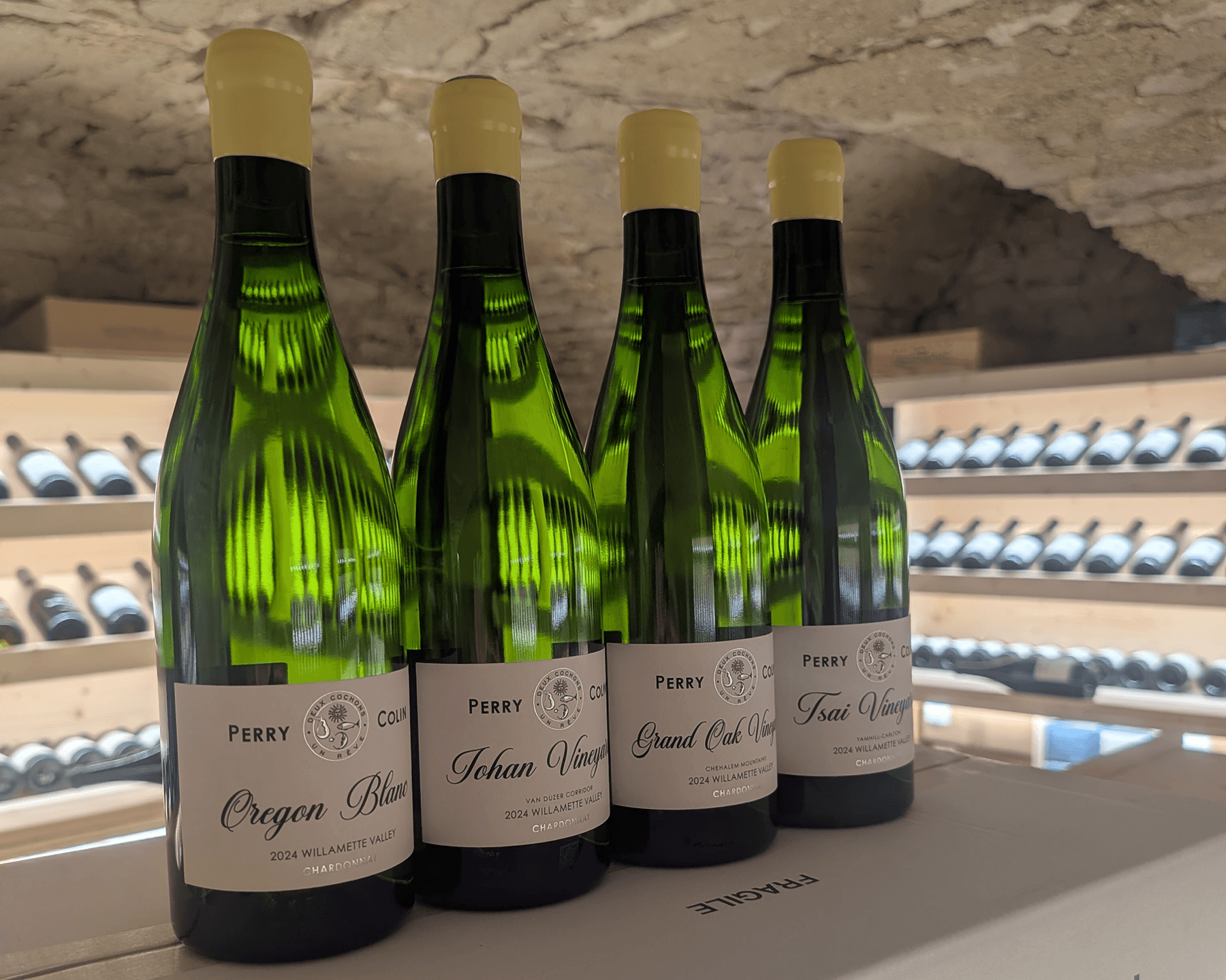

Maison Perry Colin
Introducing Maison Perry Colin
Maison Perry Colin: Where Burgundy Meets Oregon
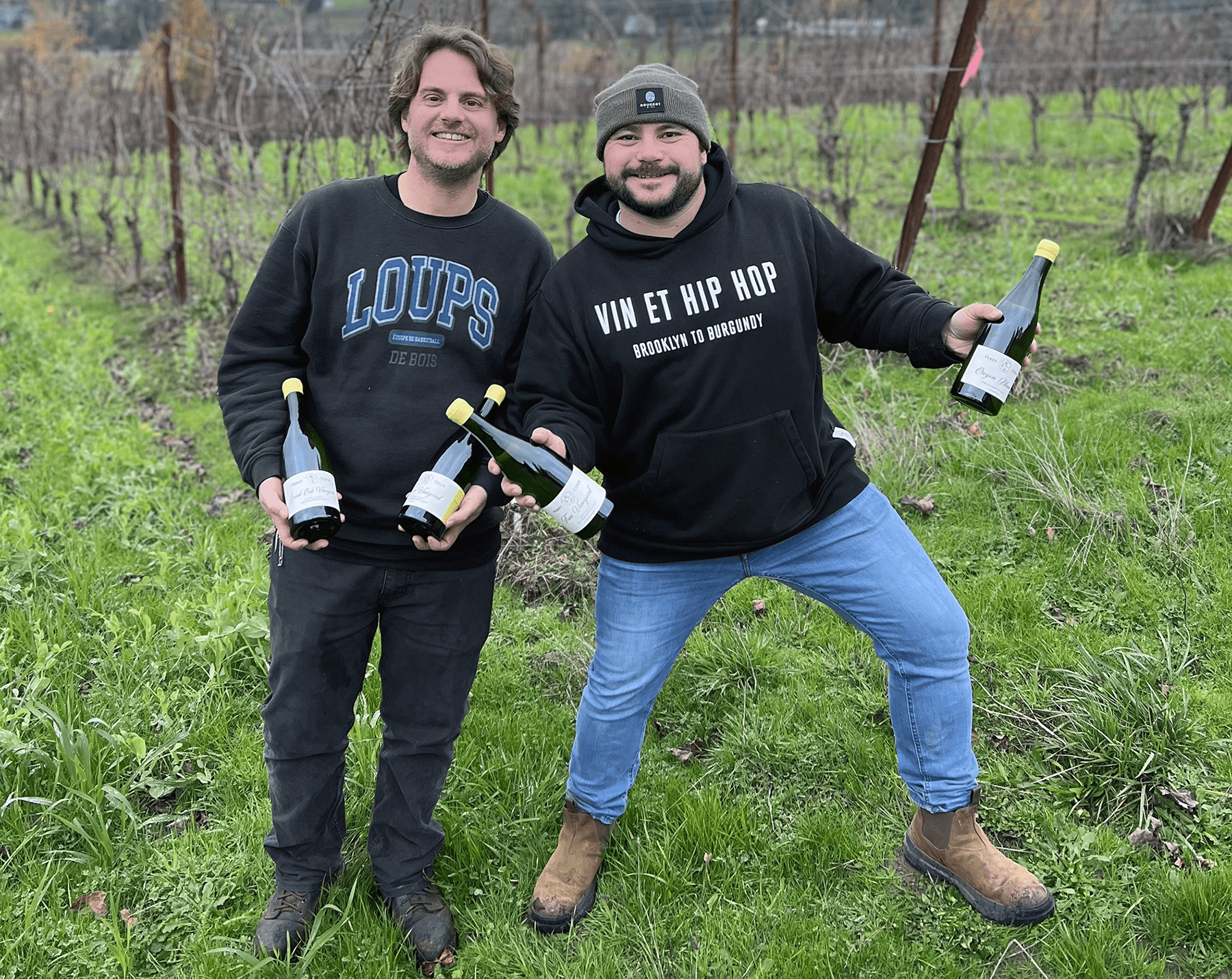
In the world of wine, some projects seem destined to be. Maison Perry Colin is one of them. Founded in 2024 by Matt Perry and Simon Colin, this young winery, located in the heart of Oregon’s Willamette Valley, embodies the meeting of two major wine-growing cultures: Burgundian precision and the energy of great American terroirs.
Though still relatively unknown, Perry Colin is already attracting the attention of lovers of great Chardonnay for its artisanal approach, its exacting standards in the vineyard, and its particularly refined style. Behind this project lies, above all, a story of friendship, shared passion, and a constant quest to express the terroir.
A Meeting Over Chardonnay
The story begins in 2016 at Adelsheim Vineyard, a historic Oregon winery. Simon Colin joined the team to deepen his knowledge of Pinot Noir and explore the terroirs of the Willamette Valley. There, he worked alongside Matt Perry, who was then in charge of the white wine program.
Very quickly, the two men shared a common vision of wine. Both sought out precise, taut Chardonnays capable of faithfully conveying the vineyard’s identity. Their friendship grew through harvests, tastings, and a shared fascination with the great white wines of Burgundy.
While Matt Perry continued his rise in Oregon, eventually becoming winemaker at 00 Wines, Simon Colin developed his own estate in Chassagne-Montrachet following several significant experiences, notably at Domaine Etienne Sauzet. Despite the thousands of miles separating them, the two friends continued to exchange ideas regularly about wine and terroirs.
In 2024, their joint project finally became a reality with the creation of Maison Perry Colin.
A winery dedicated exclusively to Chardonnay
Unlike many Oregon producers, Perry Colin Winery has chosen to focus solely on Chardonnay. This bold decision reflects their commitment to maximizing the expression of this grape variety in the cool terroirs of the Willamette Valley.
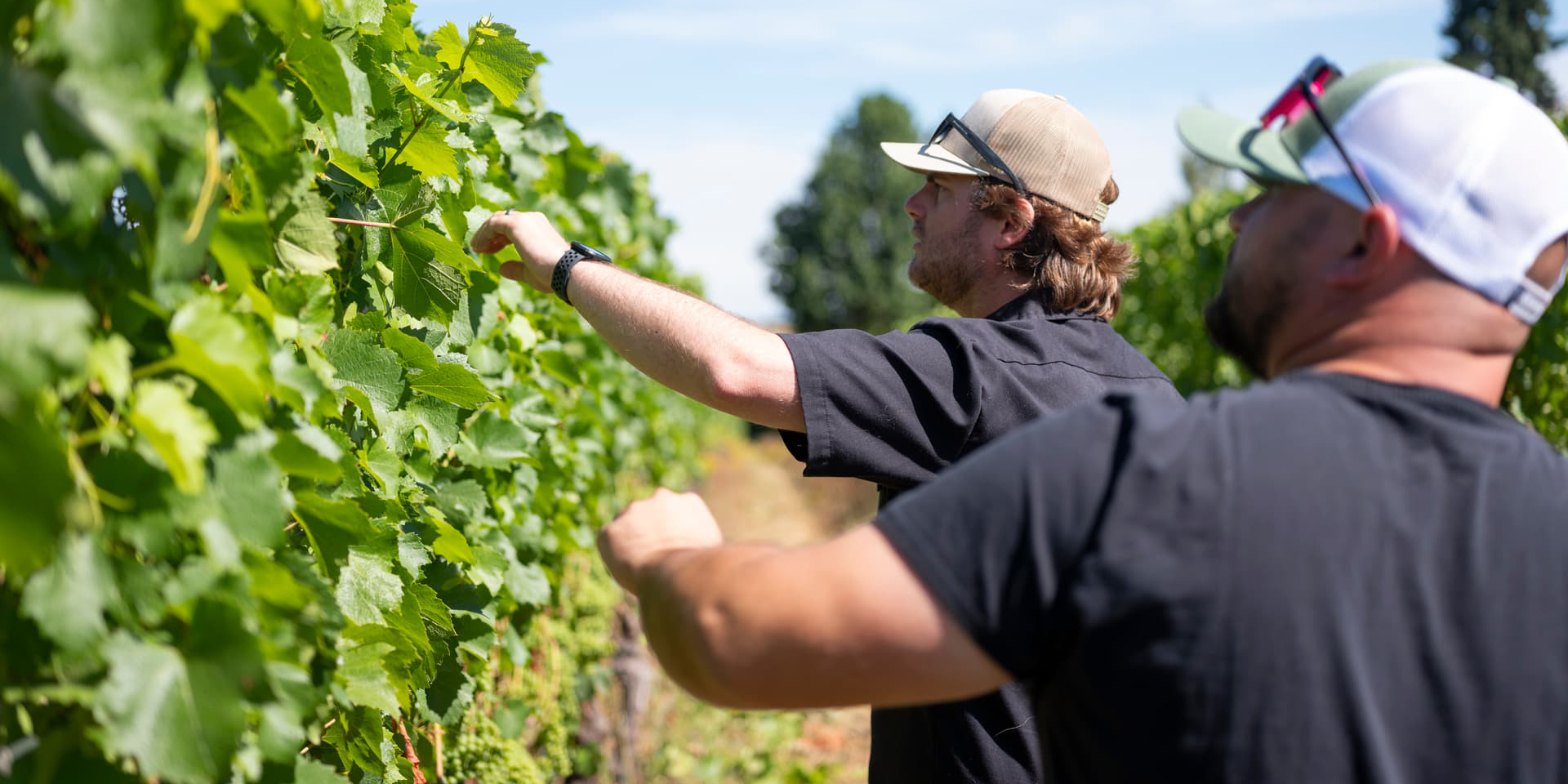
The project is based on a rigorous selection of vineyards cultivated using organic, biodynamic, and regenerative practices. Matt Perry and Simon Colin work exclusively with winemakers who share their philosophy of respect for the soil and plant life.
The goal is not to produce powerful or showy wines. On the contrary, Perry Colin seeks above all balance, tension, and aromatic purity. Each cuvée is conceived as a precise interpretation of its terroir.
Exceptional Terroirs in the Willamette Valley
The Willamette Valley has established itself as one of the most exciting regions in the United States for cool-climate wines. Located in the state of Oregon, it benefits from a strong oceanic influence that allows the grapes to ripen slowly while retaining high natural acidity.
Perry Colin works with several renowned vineyards, including Johan Vineyard, Grand Oak Vineyard, and Tsai Vineyard. Each plot has its own distinct identity, shaped by volcanic, sedimentary, or marine soils.
These terroirs produce particularly elegant Chardonnays, marked by notes of citrus, white fruit, flowers, and an often striking minerality. Some tasters even compare the style of these wines to those from great Burgundian terroirs such as Puligny-Montrachet or Chablis.
Vignoble Tsai
Nestled among old oak and fir trees, the Tsai Vineyard spans approximately 23 acres, planted with:
• 7 acres of Pinot Gris
• 2 acres of Pinot Noir
• 4 acres of Pinot Blanc
• 4 acres of Chardonnay
Formerly known as Elvenglade, the estate was the life’s work of Bill Kelley, a computer engineer turned winemaker who fulfilled his dream of living on an Oregon vineyard. He planted his first Pinot Gris in 1986 and expanded his vineyard in 1998 by diversifying his crops after consulting with viticultural experts Joel Myers and David Lett.
The current owners, Jason and Cheryl, are continuing this legacy with a strong commitment to organic and regenerative agriculture.
Technical Details
• Planting Year: 1998
• Clones: Dijon 76 and 96, grown from their own roots
• Elevation: 122 m
• Soils: Melbourne–Goodin (derived from siltstone and sandstone)
• Exposure: South
• Organic farming
Vignoble Johan
Located in Oregon’s Van Duzer Corridor AVA, Johan Vineyards spans 70 hectares (175 acres) certified biodynamic by Demeter, including 35 hectares (87 acres) of vineyards. Its philosophy is rooted in creating a holistic, self-sustaining agricultural system capable of fully expressing its identity through its wines.
Over the past eight years, the team has advanced this mission through:
• No-till farming practices
• The integration of 50 sheep and 40 chickens, which graze naturally, fertilize the soil, and maintain ecological balance
This gentle, hands-on approach nurtures living, dynamic soils, resulting in wines of depth and character.
Technical Details
• Planting year: 2002
• Clones: Dijon 76 and 95 on 101-14 rootstock
• Elevation: 70 m
• Soils: Helvetian loam
• Exposure: West
• Farming: Demeter-certified biodynamic and regenerative agriculture
Vignoble Grand Oak (Vignobles Rain Dance)
In 2009, Ken Austin III and his wife Celia—descendants of five generations of Newberg residents—planted the first vines on their estate in the Chehalem Mountains. Their approach emphasizes responsible stewardship and sustainable agriculture, while taking advantage of the unique climate of the Pacific Northwest, where sun and rain nurture deep, resilient roots.
This block holds personal significance: these are the same grapes that you and Simon worked with when he was your intern at the Adelsheim vineyard.
Technical Details
• Planting Year: 2008
• Clones: Dijon 76 on 101-14 rootstock
• Elevation: 570 feet
• Soils: Laurelwood loamy loam
• Exposure: Southeast
• Organic farming
Vignoble Worden Hill (Winderlea)
Originally planted in 1977 by Frank Gorretta, the vineyard once included Chardonnay, Pinot Gris, and Pommard. The vines were uprooted in 1997 to make way for horses, but the 20-hectare property remains dominated by Jory-type soil, with a narrow strip of Nekia in its center.
Facing due south at an average elevation of 650 feet, the vineyard is now leased and operated by Winderlea, which has transitioned from two decades of organic farming to fully biodynamic practices, earning Demeter certification in 2021.
Technical Details
• Year Planted: 1977
• Clones: Self-rooted Draper clone
• Elevation: 204 m
• Soils: Jory-Gelderman-type clay loam
• Exposure: West
• Farming: Organic and Demeter-certified biodynamic
A winemaking process inspired by the great white wines of Burgundy
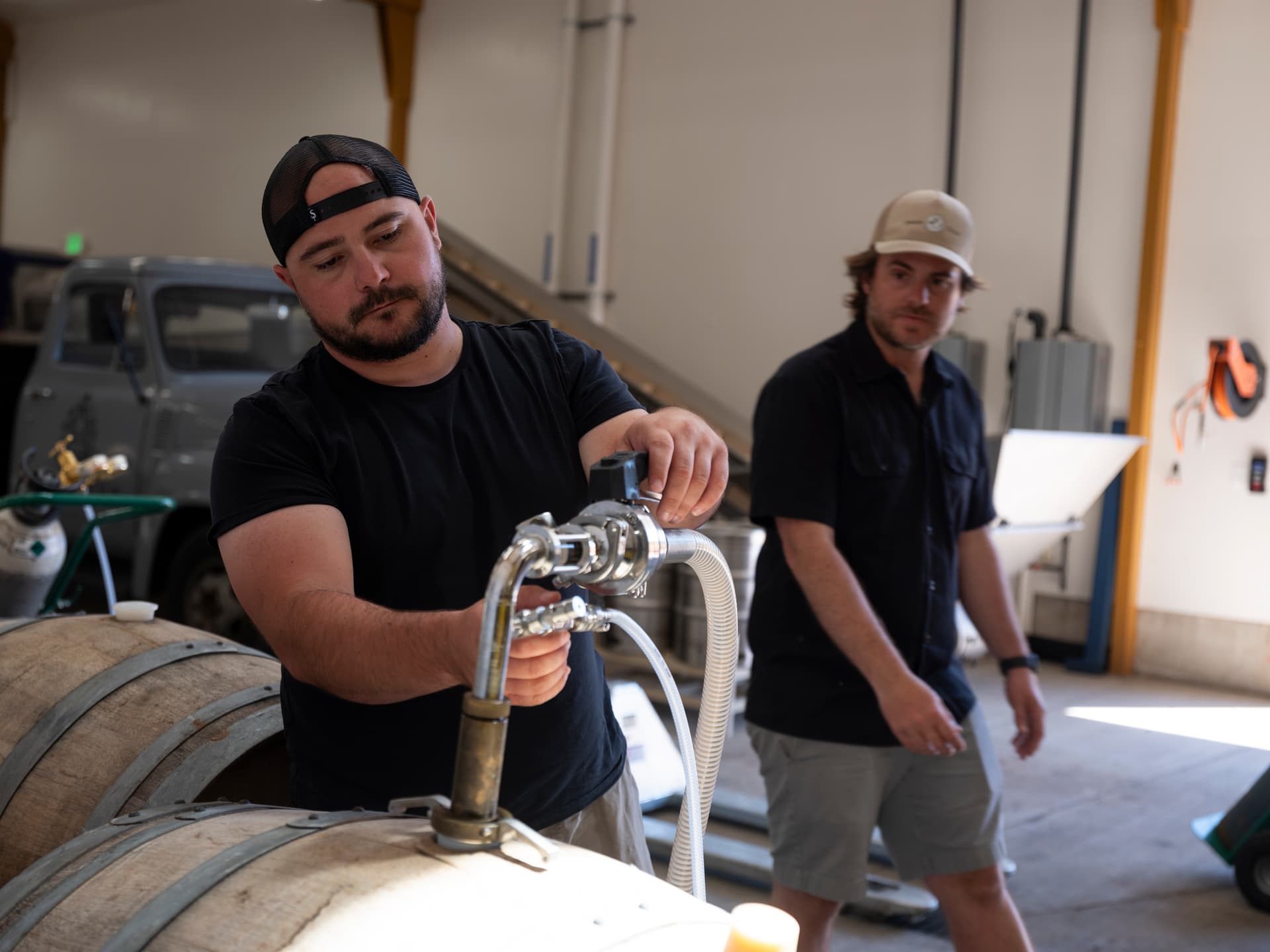
In the cellar, the approach remains deliberately minimalist. The grapes are harvested at precise ripeness to preserve freshness and natural tension. Fermentation begins naturally with indigenous yeasts, without inoculation.
Aging takes place primarily in large 350- and 500-liter barrels to limit the impact of the wood and promote a slow, harmonious evolution of the wines. Extended aging on the lees then adds depth, texture, and complexity.
This philosophy allows for the production of particularly precise wines, where the structure is always supported by energy and minerality.
Rare and already highly sought-after vintages
For this very first 2024 vintage, production remains extremely limited. Only 1,200 bottles were produced for each single-vineyard cuvée, while the Oregon Blanc, a blend from multiple terroirs, totals just 4,600 bottles.
Among the most notable cuvées, the Tsai Vineyard already captivates with its precision and remarkable tension. The Johan Vineyard impresses with its depth and aging potential, while the Grand Oak Vineyard reveals a fuller, more harmonious profile.
All the wines, however, share a common signature: freshness, purity, balance, and finesse.
A must-try new label for lovers of great Chardonnays
With Perry Colin, Matt Perry and Simon Colin have created much more than just a wine merchant venture. They offer a modern and sophisticated take on American Chardonnay, deeply inspired by Burgundy while remaining true to Oregon’s vibrant identity.
Though still in its infancy, Perry Colin is already establishing itself as one of the most exciting projects to watch for lovers of great terroir-driven white wines. The small production volumes and the enthusiastic reception of this first 2024 vintage should quickly make these wines highly sought-after.